Bureaucracy on the Ground in Colonial Mexico
A Window into the Inspection of 1765
Industry Inspection and Redesign
Over the next few years, Gálvez continued his comprehensive inspection by implementing new rules for industry. Since the Spaniards’ arrival to the Americas in the early-sixteenth century, the region had provided many sources of income for the Spanish Crown. For example, coastal locations brought in salt, which supported local communities. Every sale operated under a royal tax, which helped bring in revenue for the monarchy. Gálvez also set up several monopolies that would operate under direct royal supervision. One such industry was the production of playing cards.
In May of 1768, the Visitador issued a series of rules for salt production in the following cities: Zapotillo, Sentipac, and “other areas in the department of San Blas.” In the featured section of the new regulations, Gálvez provided specific notes for the salt coming from the Maria Islands. It would sell for a higher price than salt from other locations, and as a result, it needed separate storage at the port.
As 1770 came to a close, the Visitador returned to the issue of church administration. This time, he wrote a mandate on the process for sales by members of the church. He provided a detailed procedure, including the creation of formal records with testimonies to their authenticity.
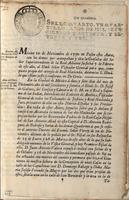
"Writ issued by the Most Illustrious Lord General Inspector on the tax on the property of ecclesiastics," page 1, 1770-12-17
View item1 / 4
Also in December 1770, Gálvez worked with local accountants and industry members to analyze the production of playing cards over the last five years. A key figure in these calculations was Juan Jose de Echeveste, who held a supervisory position in the industry. They made this comparative table on costs and profits of production. Organized by year, it records amounts of each kind of card produced. Towards the end of the document, the authors note that the total profit sent to the monarchy back in Spain was 189,450 pesos.