Social Movements in Latin America
Zapatista Indigenous Liberation in Mexico, 1994-2001
Mexico did not experience revolutions or counterrevolutions like other Latin American countries during the Cold War. However, groups, like Indigenous people, did experience repression. There were attempts at integrating Indigenous people after the Mexican Revolution. Such as teaching Spanish to Indigenous children in schools, however, this led to them losing their Indigenous languages. Indigenous people have also been among the poorest in Mexico, adding on to their vulnerability and stigmatization. This societal stigma had devolved into structural repression. In the 1990s, the Mexican government privatized their communal lands, or ejidos, and enacted the North American Free Trade Agreement, or NAFTA, displacing Indigenous crops with U.S. grown agricultural goods, threatening Indigenous livelihoods.
In 1983, a militant group of leftist Indigenous and Mestizo people from all over Mexico convened in Chiapas to form the National Liberation Zapatista Army (EZLN). Their spokesperson, SubComandante Insurgente Marcos, was a college educated Mestizo with Marxist ideals. The group wanted autonomy over their own ancestral lands and proper representation in the government. Eventually, the Indigenous people concluded that armed struggle was their only option to push back.
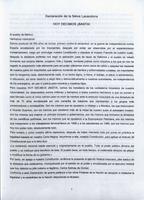
On January 1st, 1994, the EZLN declared war on Mexico from the southernmost state of Chiapas. They were fighting for the well being Indigenous people throughout Mexico. The Mexican government started to implement policies that threatened Indigenous livelihoods and culture, without their representation in government. The Zapatistas had enough: “TODAY WE SAY ENOUGH!”. [1] Their grievances would be outlined in their manifesto released in 1993. It referenced 500 years of neglect and exploitation, from the Spanish conquistadors, the regime of Porfirio Diaz, to the tyranny of the PRI. The EZLN also referenced the Constitution and established their right to form autonomous communities. The armed conflict only lasted 12 days, but the fighting didn’t stop.
"Declaration of the Lacandon Jungle", page 1-2
1 / 2
On January 12th, the EZLN and Mexican government had agreed to a cease fire and began peace talks. During the cease fire the EZLN drafted the San Andres Accords, a document that would ensure peace and justice for Indigenous people. The Mexican government agreed, signed, and transformed the accords into a bill that recognized Indigenous peoples as central to the nation’s identity. The legislation also guaranteed the Indigenous people the right to elect leaders, form governments, and preserve their languages and land.[2]
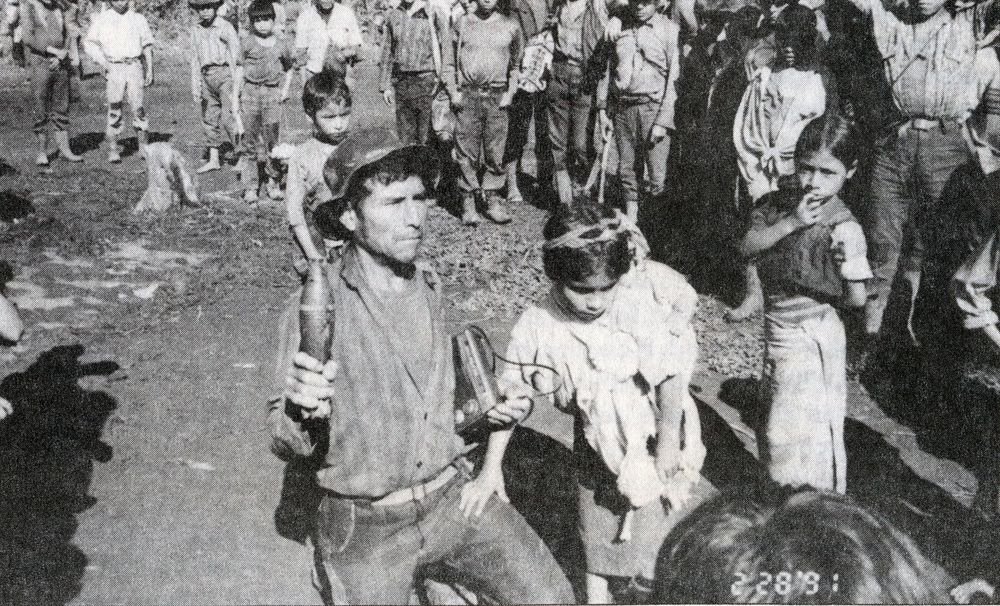
However, not only did the bill not pass but the Mexican military and paramilitary forces occupied EZLN communities. Through the years, the government incarcerated several hundred EZLN operatives as political prisoners. In Acteal, Chiapas, on December 22, 1997, a band of mercenaries murdered 45 people, including women and children.[3]
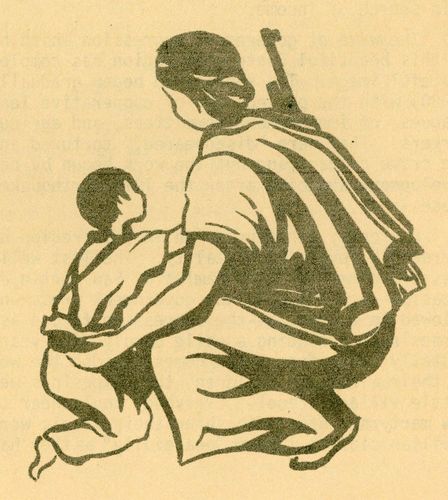
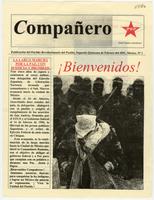
"Companion", number 1
1 / 2
"Welcome Zapatistas"
1 / 2
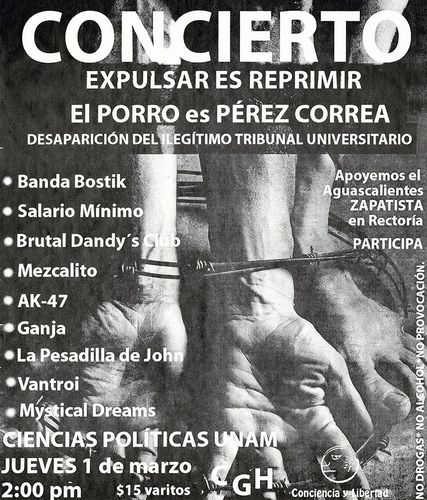
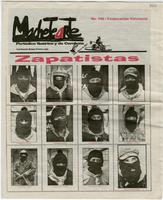
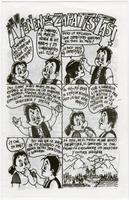
To protest the ongoing violence, the EZLN began “The March of Indigenous Dignity, the march of the color of the earth” on February 24, 2001, from Chiapas to Mexico City.[4] They had three demands: the withdrawal of military forces from their communities, the release of EZLN prisoners, and the signing of the accord-bill into law.[5] The march went through 12 states and rallied support and awareness for Mexico’s Indigenous people. Throughout, Zapatistas published materials advocating their cause. Universities took the most advantage of their published correspondence; student organizations would host events in solidarity with the EZLN on their campuses. These events include workshops, theatre performances, games, Rock music, Latin music, films, and political forums.
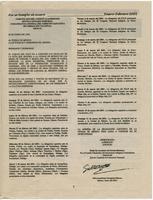
"Subcomandante Marcos and EZLN command are coming to Michoacan", page 8-9
1 / 2
"The Zapatistas Are Coming!"
1 / 3
Students and universities were strong supporters of the EZLN from the very beginning. In 1994, the Student Council of UNAM, Universidad Nacional Autonoma de Mexico, sent a letter of solidarity and support to EZLN command. This march was an opportunity for the EZLN to spread their message to all corners of Mexico. “Never again a Mexico without us”, a Mexico that no longer ignored Indigenous people. They wanted the right for Indigenous people to have control over their own lands, lives, and futures. Activists and academics particularly resonated with this message. During the march,the National School of Anthropology and History served as a temporary headquarters during the EZLN’s stay in Mexico City. Several student groups from UNAM also held several events in support of the Zapatistas; they even agreed to visit their campus on the 21st of March.[6]
The overwhelming public support for the Zapatista march forced the government to finally address their issues. Just as the EZLN was preparing to leave Mexico City, the government allowed them entry into the legislative assembly, where they presented fiery speeches before the Mexican Congress.[7] Ultimately the cry of the people and the words of the EZLN fell on deaf ears. Legislators made several amendments to the bill that defeated its purpose.[8] Additionally, the military did not withdraw from Indigenous land, and the EZLN still had comrades in prison.
The EZLN didn’t surrender. Instead of relying on the federal and state governments to provide their communities with security and political representation, they created autonomous municipalities where the people self-governed. These communities also cooperatively work with other autonomous communities in government “Juntas”. They also created community centers called Caracoles or “Snails”, these spaces were meant as a public forum between the juntas and the world at large. They even have their own website, Enlace Zapatista, where they publish regularly. In recent years, they’ve looked at restructuring their communities and government all together but the authority of the government still comes directly from the people. This autonomous governance has been the main focus of the EZLN ever since their historic march of the color of the earth.[9]
-- organized by Josué Soto (Latin American Studies, Cultural Anthropology, and Museum Studies)
[1] [Ejército Zapatista de Liberación Nacional México]. Hoy decimos basta!: declaraciones de la Selva Lacandona (San Cristóbal de las Casa, Chiapas, México: Ediciones Pirata 2003), 1-2.
[2] “Los pueblos indígenas de México: 100 preguntas”. Nación Multicultural UNAM, accessed March 14, 2025, https://www.nacionmulticultural.unam.mx/100preguntas/pregunta.php?num_pre=50.
[3] Mora, Mariana. Kuxlejal Politics: Indigenous autonomy, race, and decolonizing research in Zapatista communities (University of Texas Press, 2017), 32.
[4] Ejército Zapatista de Liberación Nacional. La Marcha del color de la tierra: comunicados, cartas y mensajes, del 2 de diciembre al 2 de abril de 2001 (Rizoma, 2001), 83-89.
[5] Michel, Guillermo and Escarzaga, Fabiola. Sobre la Marca: análisis sobre el Movimiento zapatista 1997-2001 (Universidad Autónoma Metropolitana- Xochimilco, 2001), 166-167.
[6] Ejército Zapatista de Liberación Nacional. La Marcha del color de la tierra: comunicados, cartas y mensajes, del 2 de diciembre al 2 de abril de 2001 (Rizoma, 2001), 338-344.
[7] Ejército Zapatista de Liberación Nacional. La Marcha del color de la tierra: comunicados, cartas y mensajes, del 2 de diciembre al 2 de abril de 2001 (Rizoma, 2001), 366-399.
[8] Mora, Mariana. Kuxlejal Politics: Indigenous autonomy, race, and decolonizing research in Zapatista communities (University of Texas Press, 2017), 36-37.
[9] Michel, Guillermo y Escárzaga, Fabiola. Sobre la Marca: análisis sobre el Movimiento zapatista 1997-2001 (Universidad Autónoma Metropolitana- Xochimilco, 2001), 187-188.