Middle East Banking in the 20th Century
Bank Reports: Sources for Social and Political History
The Turkish Central Bank's page noting the National Holidays of Turkey is an important source for understanding when holidays were observed, and which ones were observed. The history of acknowledging certain events and/or religious obligations is significant for understanding the development and growth of the modern Turkish Republic.
National Holidays in Turkey
Central Bank of the Turkish Republic, 1955.The Turkish Central Bank also included a list of legislations passed during the year of report. This list offers the same information in two languages (French and modern Turkish), this providing the researcher with essential material for exploring how the Turkish state used translation and multilingual publications in its outreach and reporting. This list is also a crucial source for the history of law in the Turkish Republic, and inherently reflects the priorities of the Central Bank through the choice to highlight these measures.
List of Legislations (French)
Central Bank of the Turkish Republic, 1955.Issued Legislations (Turkish)
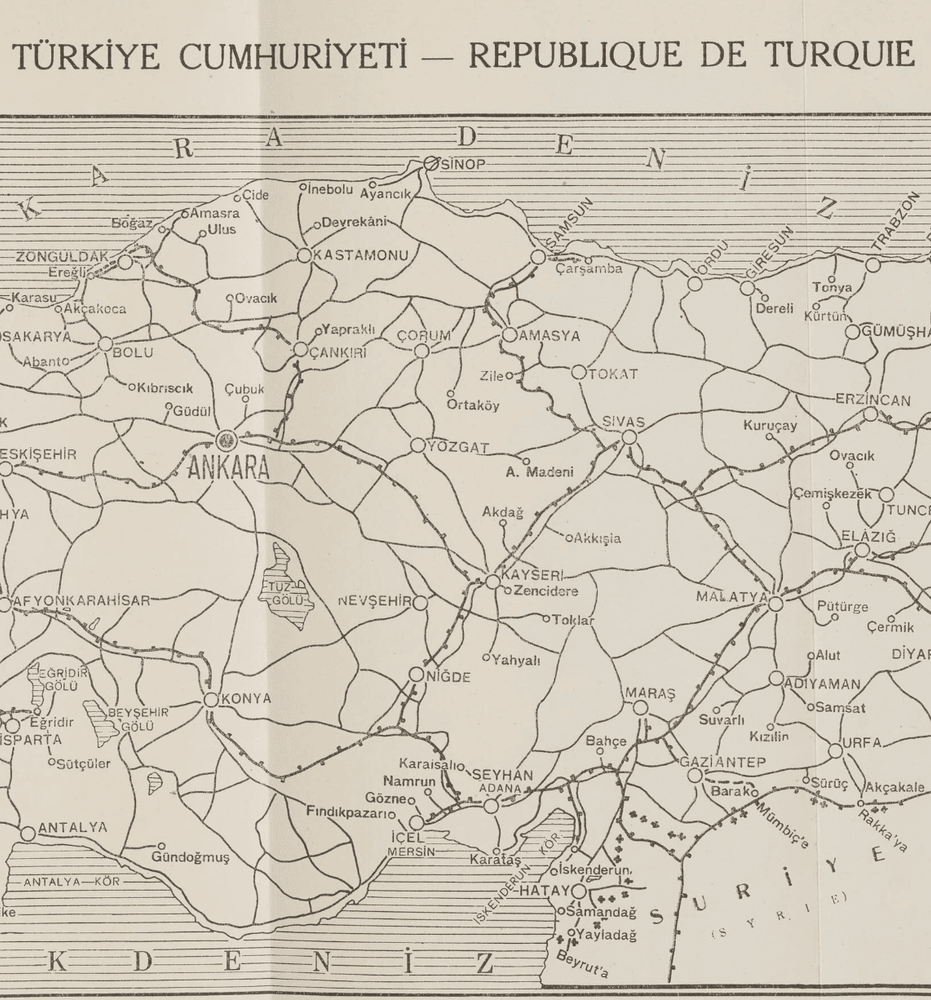
Central Bank of the Turkish Republic, 1955.Not to be forgotten are the maps often included in bank reports. The Turkish Central Bank and the National Bank of Iran have both provided demographic, infrastructural, and political data in the form of these maps. Both delineate major railroad lines, roads, highways, and population centers. The National Bank of Iran goes further to indicate where its branches and agencies are located in relation to population size (and incidentally, to infrastructural development).