Social Movements in Latin America
Indigenous Resilience in Guatemala, 1960-1996
Since the conquest of Guatemala, wealthy elites have subjected indigenous people to land dispossessions and exploitation. They have been a cheap source of labor, and have faced poverty, malnourishment, and a lower lifespan averages.[1] Elites put Guatemala’s Maya and campesino (a poor landless farmer) populations to work the land that was concentrated into few hands. The recognition that laboral conditions needed to be improved and the growing class consciousness of Guatemala offered an opportunity for indigenous communities to advocate for their rights and right to livelihood. After the resignation of Jorge Ubico, whose politics undermined the dignity of Guatemala’s indigenous communities, Guatemala endured a brief democratic period after dictatorship from 1944-1954 that ended in a United States-sponsored coup de’état.
Juan José Arévalo and Jacobo Árbenz provoked foreign elites and local landowners by cultivating a class conscience and eventually instituting land redistribution, including land for indigenous communities. The economy improved under the agrarian reform, and exports from the country diversified as indigenous people participated in the economy. After the coup, however, the new military government reversed all of these redistribution policies and began a counterinsurgent campaign against supporters of the previous government. This included communists, leftists, and poor and indigenous people who supported the Arévalo and Árbenz administrations. What on the surface was a counterinsurgent campaign against communist ideology and influence, was a period of genocide, surveillance, and terror for campesinos, indigenous, and leftists from the 1960s to 1990s.
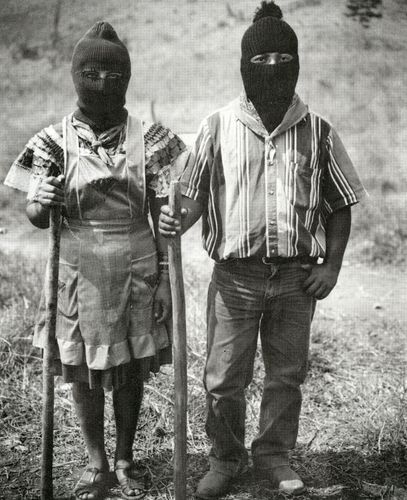
Guerrillas were the armed opposition and main concern of the counterinsurgency. They operated in rural parts of Guatemala and received foreign support such as Cuban guerrillas. For the most part, soldiers viewed their participation in the military as a way to fight for the country against communist influence, and that indigenous people were intentionally halting national development by imposing on national land they asserted they had the ancestral right to. Campesino and indigenous support for the guerrillas grew as they grew in solidarity for each other against the oppressive force of the military. Indigenous membership was common in the guerrillas, as they ideologically aligned themselves along the virtues of land and labor rights that guerrillas published in manifestos. Some guerrillas actively advocated for the rights of the indigenous, blurring the lines between the innocent and the insurgent, further increasing military indiscrimination in their operations.
The government considered indigenous participation in the guerrilla movement as a legitimate threat that required extermination. In a testimony by a woman who lived in a refugee camp, she quotes President General Efraín Ríos Montt (1982-1983) as saying that if they have to kill 4.5M Indians in order to wipe out the guerrillas, that they would.[2] While soldiers maintained that they were protecting indigenous communities, they would indiscriminately attack civilian camps they suspected had guerrilla presence. She continues, ‘’All they said was that the soldiers had fought the guerrillas, and that they had killed many. But it wasn’t the guerrillas that died; it was the people of the village.’’ The killings were often cruel, with soldiers at times murdering children as their parents watched on. Indigenous culture was equated to subversion, meaning army units destroyed sacred places and ceremonial sites important to the predominantly Q’eqchi’ Maya people. By the time that the war ended in 1996, the state had killed 200,000 people and disappeared 40,000, of which a large majority included indigenous people.[3]
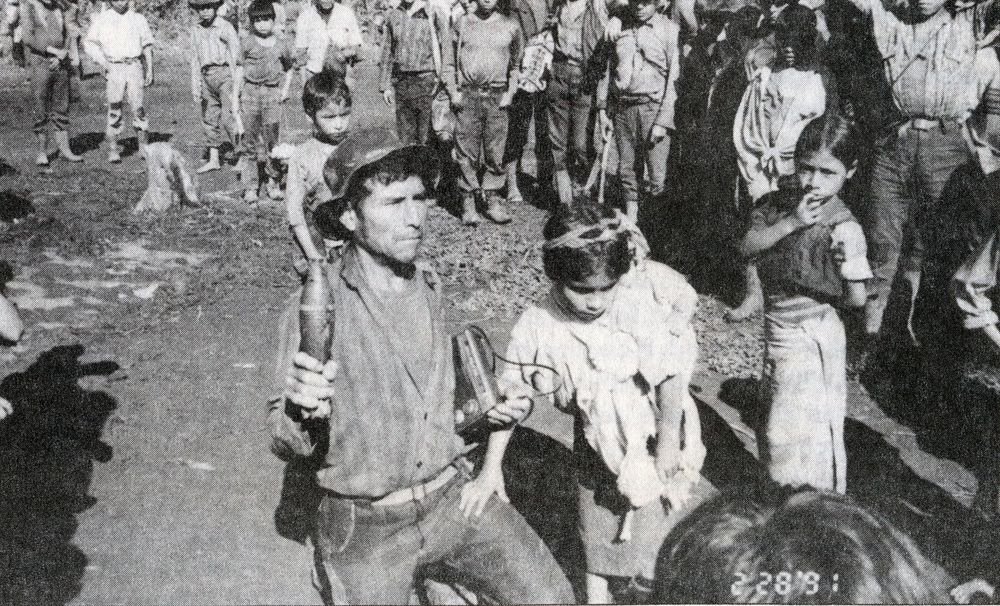
In response to the persecution, indigenous groups and other working class people from the countryside formed civilian resistance identities within the camps they stayed in to support each other and take refuge from the military attacks. These groups were called the Civilians of the Population in Resistance (CPR), and were organized to facilitate children’s education, gather resources, and have local leaders in charge of each camp. The groups were primarily concentrated in the Ixcán Jungle, in the department of the Quiché. In 1990, the CPR of the Sierra announced their existence and their state of siege.[4] Eventually, other CPR groups would join in to voice their existence, and create literature of their hope, trauma, and resilience. International awareness was crucial in order to start creating negotiation efforts and pressure to end the civil war.
Maya women participated at all levels of the struggle during the Guatemalan counterrevolution. They simultaneously raised children, preserved culture, and defended their community for liberation. This drawing represents some of these roles. It depicts an indigenous woman in typical dress wearing an ammunition belt while weaving a rifle into a textile loom. Through weaving, a task often designated to only women, the woman is symbolically preserving a cultural practice as they also take up arms to defend their community.
Indigenous and campesina women were subject to immense amounts of tragedy during the counterrevolution but proved resilient. Guatemalan soldiers would often subject these women to sexual abuse, and at times be forcibly impregnated. At other times, their children might be forcibly taken for military recruitment, or their loved ones would be murdered or disappeared. Despite the grief and invisibility of this trauma, indigenous women proceeded to support their communities by helping out at the milpas (an agricultural field), cooking, teaching children, or weaving textiles. Rigoberta Menchú observed the valor of women by finding that in difficult situations, Guatemalan women are calmer about deciding what to do, taking initiative over impulsion even if it's a life or death matter. Women additionally knew how to struggle for their culture; ‘’We have all had to learn to do every kind of work. It makes no difference if you’re a man or woman; we’re all exploited and we’ve all had to work.’’[5] They were an important feature to the struggle and fight for liberation in the civil war.
It had not been an easy feat for the Peace Accord Deals to come into fruition. Despite the international pressures and visibility of the CPR, the government claimed the CPR was the political arm and base for the counterinsurgency. Although attacks slowed down due to scrutiny, the military continued to raid and capture people from the CPR. The government and the Unidad Revolucionaria Nacional Guatemalteca (URNG), a coalition of guerrillas and far left- political parties, had not come to any agreements and this would be the case for several years until 1996.[6] Throughout the years-long negotiation process, indigenous people’s concerns were central to the conversations held. Indigenous leaders, like Rigoberta Menchú, were crucial figures to voice the needs and demands of the Maya community. Although the URNG and CPR did not succeed in reinstating the Jacobo Arbenz-era of agrarian reforms, the accords did codify the right and cultural respect for indigenous people and outlined the transition that would make the government more open, participatory, and democratic. The accords would also signify the rest of arms for the guerrillas, a substantial shrink in the Guatemalan military, and an official end to the counterrevolution.
-- organized by Ash Catalán (Latin American Studies and Spanish Creative Writing)
[1] Becker, Marc. Contemporary Latin American Revolutions . 2022, 91.
[2] Unknown. The Compñeras Speak: Testimonies of Six Women . Guatemala News and Information Bureau. Guatemala. Ca. 1990
[3] Grandin, Greg. The Last Colonial Massacre: Latin America in the Cold War . Chicago & London: The University of Chicago Press. 2011. pg. 30.
[4] Guatemala Health Rights Support Project. Communities of Population in Resistance (CPR). Guatemala. July 1992.
[5] Menchú, Rigoberta. Women Are Raising Their Voices: Jim Stephens interviews Rigoberta Menchú . 5 January, 1983.
[6] Guatemala Health Rights Support Project. Communities of Population in Resistance (CPR). Guatemala. July 1992.